Professional Summary
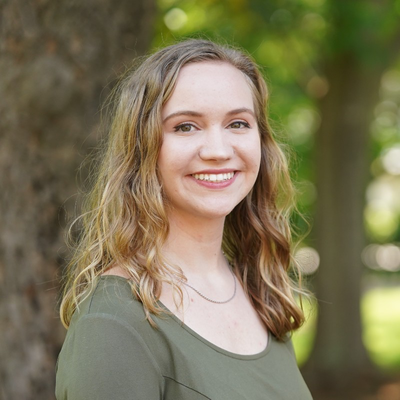
Danielle Chloe Griffin is an NSF Graduate Research Fellow and Ph.D. candidate in Applied Mathematics at Brown University, specializing in the intersection of scientific computing, HPC, and machine learning. Her work bridges the gap between rigorous numerical analysis and modern AI, ranging from robust CFD algorithms for shock-capturing to deep learning models for medical imaging and differential equations. With research experience spanning Oak Ridge National Laboratory, Karlsruhe Institute for Technology (KIT), and Alfred Wegener Institute (AWI), she leverages advanced mathematical methods to solve complex problems in fluid dynamics and the physical sciences.
Education
Ph.D. in Applied Mathematics
Brown University
M.S. in Applied Mathematics
Brown University
B.S. Mathematics & B.A. Biology
Converse University
Interests
My research lies at the intersection of numerical analysis, high-performance computing and scientific machine learning. I specialize in developing robust, high-order numerical methods that ensure physical accuracy in complex simulations.
Positivity-Preserving Methods for Conservation Laws
Working with Prof. Chi-Wang Shu, I developed a sweeping, positivity-preserving limiter for high-order finite difference WENO schemes. This algorithm prevents numerical blow-ups caused by non-physical results such as negative density or pressure in high-speed compressible flows. The method is rigorously bound-preserving and computationally efficient, making it ideal for industrial CFD applications where robustness is paramount.
Multi-Resolution Schemes for Global Ocean Models
During my time at the Alfred Wegener Institute (AWI) in Germany, I developed multi-resolution WENO schemes for a global ocean model. We focused on a dual-mesh finite volume method to accurately simulate scalar transport across irregular grids, providing a computationally efficent alternative for large-scale geophysical flows while maintaining oscillation control.
Current Directions
I am currently extending the sweeping positivity-preserving framework to implicit time stepping methods, specifically targeting the Navier-Stokes and Magnetohydrodynamics (MHD) equations. I am actively looking for collaborators interested in robust numerical schemes for plasma physics and viscous fluids. I am also interested in using the limiter as a post-processing step for conservative PINNs or other machine learning methods for conservation laws. Please reach out if you are interested in a collaboration.